Western Arizona (Burro Creek, Saddle Mountain, Black Hills)
Fire agate, chalcedony roses, common opal, jasper, geodes, and quartz crystals. Long graded-dirt approaches off US-93 and I-10.
52 mapped spots across 6 counties. Arizona is strong for copper minerals, agate, fire agate, and petrified wood. Round Mountain, Saddle Mountain, Burro Creek, and old mining districts across central and southwestern Arizona give rockhounds plenty of legal places to check.
Representative spot and material photos from locations in this state, shown where verified public image records are available.
Map showing 52 rockhounding spots in Arizona
Counts reflect how many spots in this list mention each mineral.
Notable areas: Petrified wood (outside the National Park), fire agate, malachite, azurite, chrysocolla, and Arizona ruby (pyrope garnet) are among the most sought finds.
Southern and western Arizona are dominated by Basin and Range valleys with Tertiary volcanics, the source of much of the state's agate, jasper, chalcedony, and fire agate. The central highlands and Mogollon Rim expose Permian to Triassic redbeds tied to Holbrook-area petrified wood. Mining districts such as Bisbee, Globe-Miami, Morenci, and Bagdad yield secondary copper minerals including malachite, azurite, and chrysocolla, mostly from old mine dumps.
Fire agate, chalcedony roses, common opal, jasper, geodes, and quartz crystals. Long graded-dirt approaches off US-93 and I-10.
Apache tears (perlite), fire agate at Round Mountain Rockhound Area, peridot at San Carlos Apache (permit required), and copper minerals around Globe and Superior.
Holbrook-area private pay-to-dig ranches (e.g., Dobell, Jim Gray's) and small parcels of state trust land produce gem-grade Triassic petrified wood. The national park itself is strictly off-limits.
Old mine dumps and tailings on private claim ground produce malachite, azurite, chrysocolla, turquoise, and rare secondary copper minerals. Many are now fenced — confirm permission.
October through April is the comfortable window for low-desert collecting in southwest and western Arizona. Rim country and the high desert near Flagstaff are better from May through October. Avoid the west desert in July and August unless you are set up for extreme heat.
Snake-resistant boots and long pants, at least a gallon of water per person per half-day, sun protection, GPS or offline maps, a high-clearance vehicle for many backcountry approaches, and a UV light if you're heading to known fluorescent mine dumps.
Arizona's rockhounding culture has its roots in mining-camp prospectors and turn-of-the-century mineral collectors at Bisbee and the Morenci district. Petrified Forest National Park was set aside in 1906 in part because so much wood had already been carted off; ironically, that closure pushed collectors onto surrounding ranches that still operate as pay-to-dig sites today.
Day-trip range. Each section lists the closest mapped rockhounding spots within about 150 miles of the city — most are inside a 2 to 3 hour drive.
6 closest spots to Phoenix, AZ.
6 closest spots to Tucson, AZ.
Geology rarely respects state borders. These states share mapped rockhounding country with Arizona — useful when Arizona is the start, not the whole trip. Each card links to the closest county across the line.
County pages are linked once we have at least 3 mapped spots for a focused guide with coordinates, mineral notes, and nearby spots.
Hand-picked standouts from the Arizona list, chosen for unusual mineralogy, documented public access, or both. Each card links to coordinates, access notes, and what to look for.
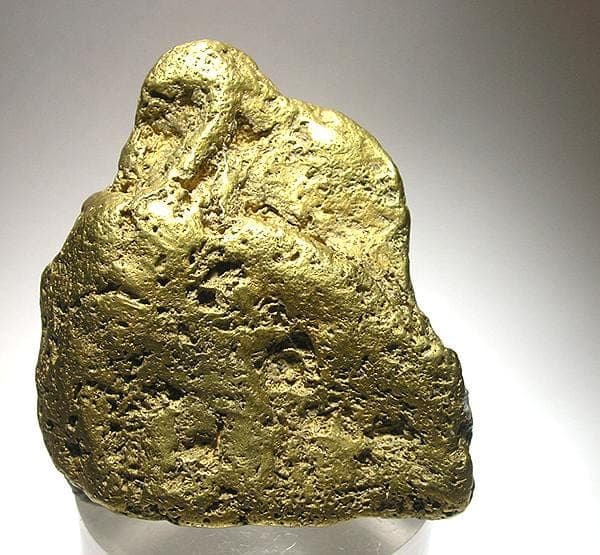 Top pick
Maricopa County
San Domingo Wash is a documented Au-Pt placer district in the western foothills of the Wickenburg Mountains, with Mindat and USGS-derived records tying the gold to stream-placer concentration. It stands out for Phoenix-area collectors because the target is a named historic placer system, not scattered speculative gold ground.
Gold
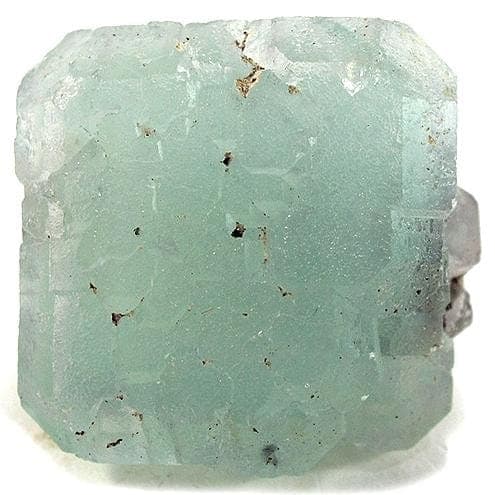 Top pick
Pima County
Neptune Mine is a focused Arizona fluorite locality, with Mindat and MRDS records describing a former fluorspar mine where fluorite occurs in lenses and stringers along a schist-granite contact zone. The site adds mineral diversity to the Arizona list because it is a documented industrial-mineral occurrence rather than another chalcedony or placer-gold wash.
Fluorite
 Top pick
Maricopa County
Red Rover is a compact Cave Creek district copper-silver stop, with Mindat listing chalcocite and tetrahedrite-group minerals and Western Mining History tying the mine to copper, silver, and gold. It is notable because those sulfide minerals give the Maricopa County list a real ore-mineral locality, not just agate, jasper, and quartz float.
Chalcocite, Tetrahedrite
 Top pick
Greenlee County
Black Hills is one of Arizona's clearest public fire-agate localities, with BLM stating that fire agate is the principal attraction and that the site is open for public digging without fees or permits. The locality stands out because the collecting target is specific, chalcedony with opal-like color play in volcanic deposits, and the land manager publishes both access and collecting context.
Fire Agate, Chalcedony
 Top pick
Greenlee County
Fire agate is the reason the York and Duncan country earns the first Arizona slot: BLM identifies the nearby Round Mountain area as a public rockhounding destination, and its Arizona brochure lists fire agate as a notable Safford Field Office gemstone. The broader York area adds banded agate, carnelian, and jasper, so the site represents southeastern Arizona's volcanic chalcedony ground rather than a single-mine specimen stop.
Fire Agate, Banded Agate, Carnelian, Jasper
 Top pick
Mohave County
Kingman Feldspar Mine represents northwestern Arizona pegmatite collecting, with documented feldspar-quartz workings and rare-earth allanite from the Kingman area. It rounds out the top 10 because the mineral suite, microcline, quartz, and allanite, is geologically different from Arizona's better-known fire agate, turquoise, and placer-gold localities.
Allanite, Microcline, Quartz
 Top pick
Mohave County
Meadow Creek Pass belongs to the same western Arizona volcanic-desert collecting belt that gives Mohave County its agate, chalcedony, jasper, and fire-agate reputation. It earns a place because the material suite is broader than a single color of agate, while BLM's Arizona guidance specifically flags fire agate on Kingman Field Office public lands.
Fire Agate, Grape Agate, Chalcedony, Jasper
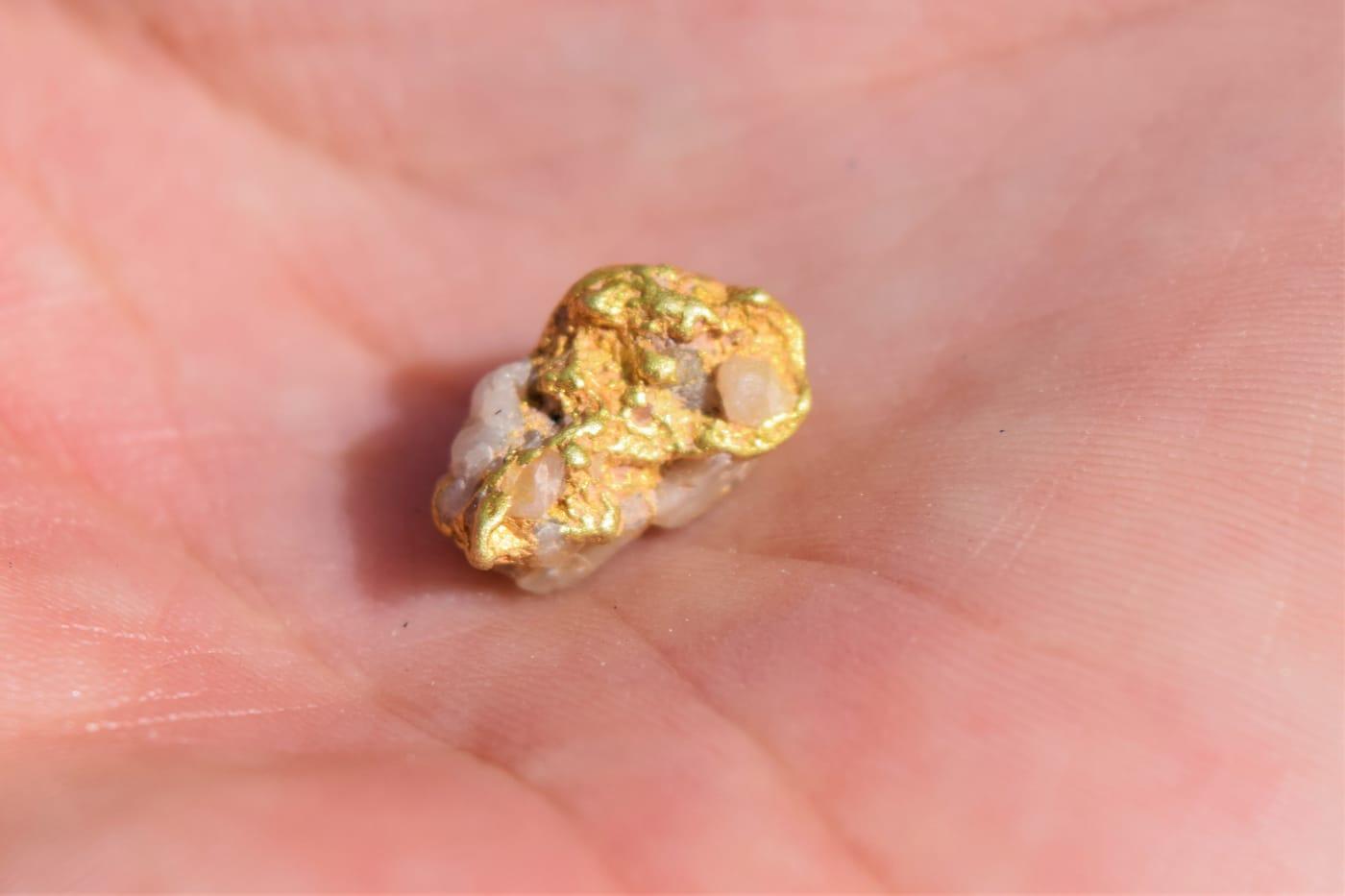 Top pick
Yavapai County
Rich Hill is Arizona's benchmark coarse-gold placer, documented by USGS as part of the Weaver district and by later geochemical work for nugget-rich placer units. Its importance is not just production history: the locality is specifically known for surface and shallow placer gold concentrated around Rich Hill, Antelope Creek, and Weaver Creek.
Gold Nugget
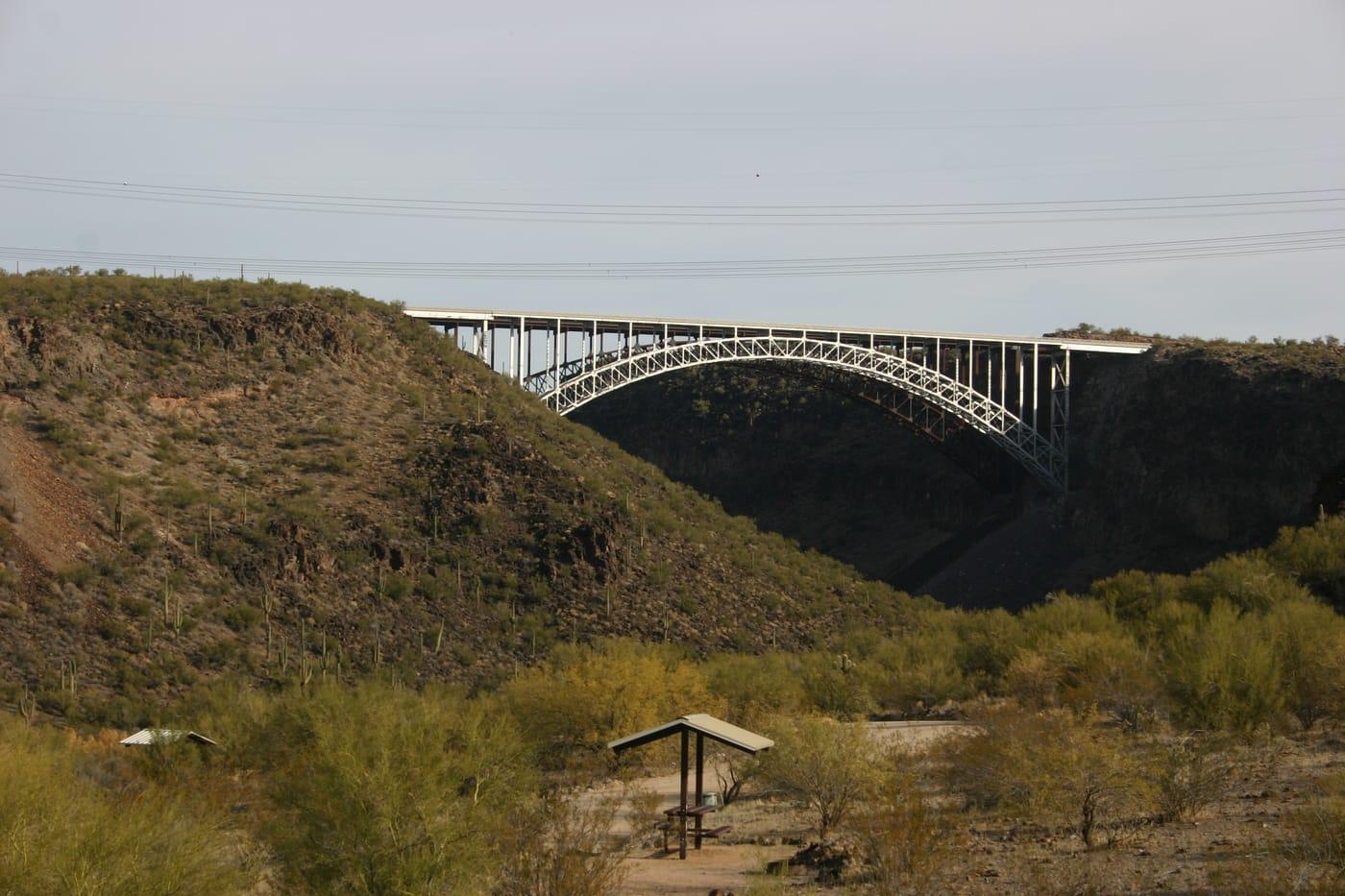 Top pick
Mohave County
Burro Creek is a Mohave County agate landmark, with Mindat recording both the Burro Creek agate occurrence and agate in the Lower Burro Creek Wilderness Area. The site is especially useful for lapidary collectors because the material is colorful chalcedony-family float tied to a well-known BLM desert drainage, not a vague county-wide agate listing.
Pink Agate
 Top pick
Gila County
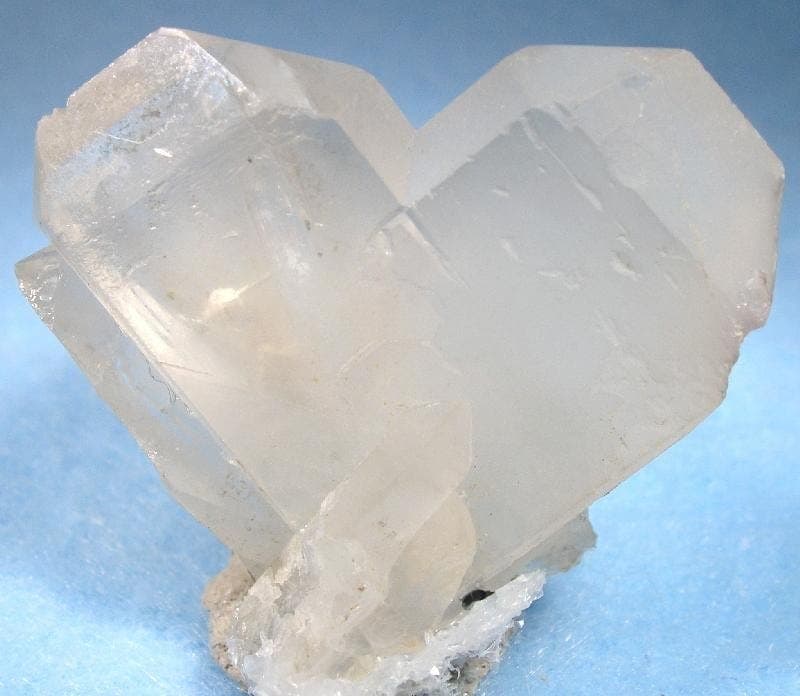
Diamond Point is a managed Forest Service crystal site where clear, doubly terminated quartz crystals weather out of cavities in the Devonian Martin Formation. The combination of published geology, a defined 35-acre collection area, and a 10-pound-per-person daily limit makes it one of Arizona's strongest legal quartz localities.
Quartz
Sorted by county. Tap coordinates to open in Google Maps, or open RockHoundR for the full map view with land overlays and weather.
Open the RockHoundR app to see Arizona on a real map with public land overlays, weather, geology, and your saved finds.